The music
Fado in a port cellar
What fado is, the two guitars that play it, where it comes from and what saudade means: a short listening guide for the fado set in Fonseca's cellar.
See dates for fado at Fonseca ↗Quick answer
Fado is Portuguese urban song, on UNESCO's intangible heritage list since 2011: usually one singer with a Portuguese guitar and an acoustic guitar, singing in Portuguese about longing, fate, love and city life. In Fonseca's cellar a short live set accompanies the tasting. Knowing the words is not required. Listen to the Portuguese guitar answering the voice, and to the pauses at the ends of phrases, where much of the feeling sits.
What UNESCO means by fado
UNESCO inscribed fado in 2011 and treats it as music and poetry together, born from a mix of sources: sung dances that came by way of Brazil and Africa, Portugal's own songs and dances, the music of country people who moved to Lisbon, and the city songs of the early 1800s. The usual line-up is one voice, a man's or a woman's, over two instruments, the Portuguese guitarra and an ordinary acoustic guitar strung with wire. Professional fadistas sing in concert venues and in the small fado houses; amateurs keep it alive in clubs across the older quarters of Lisbon.
The two guitars
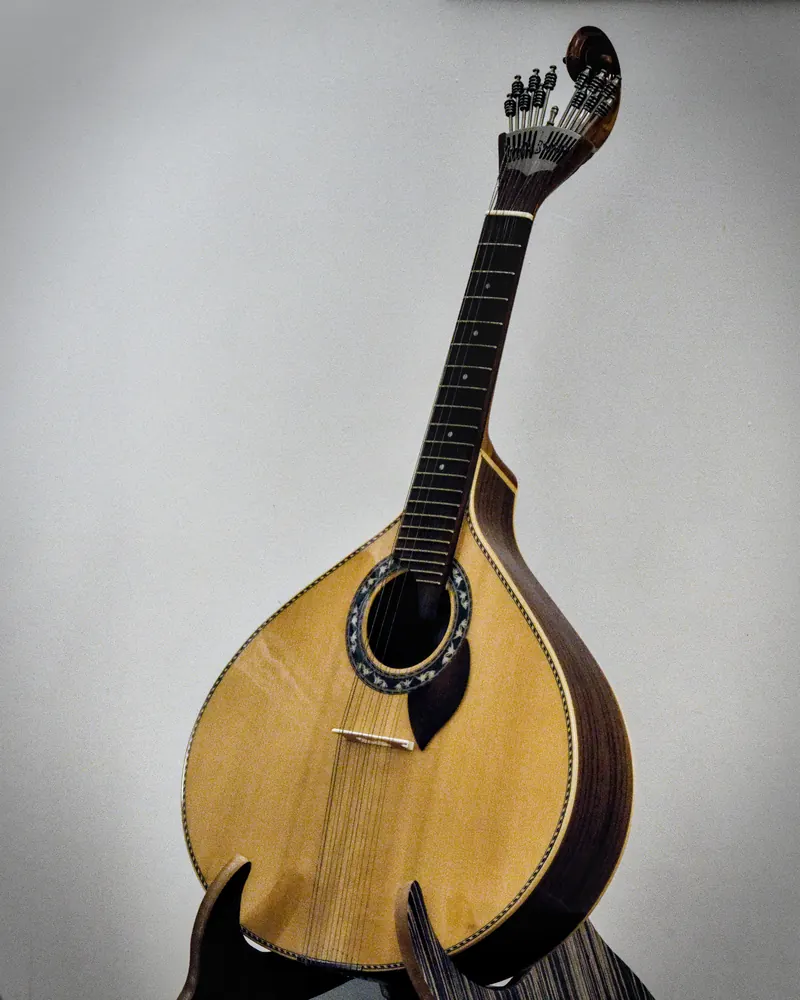
The instrument you notice first is the guitarra portuguesa: a rounded, pear-bodied cittern whose twelve steel strings run in six pairs, tuned with a fan of watch-key pegs on its head. Builders make two models, named after Lisbon and Coimbra, which differ in size, decoration and tuning. In the Lisbon way of accompanying, the guitarrista opens the song, often with a phrase taken from the second half of the tune, then replies to each line the singer delivers, so the two seem to converse. The acoustic guitar, called the viola in Portuguese, plays alongside it.
Lisbon, Coimbra and Porto
Fado's documented story starts in 1820s Lisbon, in the bohemian streets of Alfama, Bairro Alto and Mouraria, and it may well be older still. The second great tradition belongs to Coimbra and its university: men in student gowns and capes sing it after dark, on the steps of old churches and in the city's squares. Porto's part in the story is the instrument's: in the eighteenth century the city's merchant families took up a locally modified cittern, one of the forerunners of the Portuguese guitar, for music at home.
Saudade and the shape of a song
Fado is often linked to saudade, the Portuguese name for a melancholy longing for someone or something absent, perhaps never to return. Many songs are about the sea, the poor, love and fate, but a fado can be about anything. Musically, listen for rubato: the voice lingers on a line's final note while the guitars wait for it to end, a pause that carries much of the drama. Melodies may move between major and minor keys, sometimes within a single verse.
A fado house or a cellar set?
Fado reaches visitors in a few different settings. Concert halls present it as a stage performance. Small fado houses, which UNESCO names alongside the concert circuit, make it the centre of an evening. Places like Fonseca's cellar fold a short set into something else, here a tasting of port. None of these is the one correct way to hear it; they simply ask for different amounts of your evening. If the cellar set leaves you wanting more, a fado house on another night is the natural next step.
Listening in the cellar
In Fonseca's cellar the fado set is played while the tasting is poured, so the music and the two glasses arrive together. It is a short set rather than a full concert, and who plays on a given night is the house's choice. The songs are sung in Portuguese with no translation, which matters less than you might expect: the guitar's introduction, the singer's held notes and the quiet between songs tell you most of what you need. Keep conversation for the gaps between songs, as you would at any small acoustic performance.
Frequently asked questions
Do I need to understand Portuguese to enjoy fado?
No. The songs are in Portuguese, but the voice, the guitarra's answering phrases and the long held notes carry the feeling without a translation.
What is the difference between the Portuguese guitar and a normal guitar?
The guitarra portuguesa has a rounded, pear-like body and twelve steel strings set in six pairs, with watch-key tuning pegs. The acoustic guitar next to it supplies the chords.
Sources